


We often hear people say, “It’s just a little discomfort,” or, “They don’t remember it.”
We’re talking about Marking Day. And these statements are simply untrue.
We’ve seen first-hand the neurological damage, infections, and emotional trauma these practices cause. Lambs who once ran to their mothers for milk are left collapsed in fields, unable to stand, their bodies in shock. We’ve had lambs arrive at Freedom Hill Sanctuary unable to walk, unable to lift their heads, their eyes distant with fear.
This is not a moment of discomfort. It’s prolonged agony — and the effects are sometimes lifelong.
On Marking Day, baby boys have their testicles and tails “banded” — a process where the blood supply is cut off by tight rubber rings with the aim that these organs and appendages will eventually die, separate and fall of their bodies.
Girls endure the same agony to their tails. And all lambs, boys and girls, have ear tags rammed through with little care for their pain.
It is a day of silence, screams and trauma for the youngest and most vulnerable.
Marking is seen as “routine management” to prevent flystrike, identify animals, and manage reproduction.
But it’s important to be clear: these goals can be achieved without cruelty. Marking is not the only option, it is an option of convenience and efficiency for the mass farming industry which finds itself unable to care and avoid suffering for the sheer number of individual animal lives involved.
So we have to ask ourselves: is the convenience of mass farming worth the suffering it causes?
At Freedom Hill, we believe the answer is no.
Every lamb at our sanctuary has a story. Many bear the scars — physical and emotional — of marking day. Some, like little Diana, arrived unable to walk, their brains affected by the trauma of the procedures. Others, like Tarzan and Jane, cried out in pain for days after tight rubber rings were applied by inexperienced hands on a hobby farm.
These are not isolated cases. They are the norm.
Before marking day, Diana was a bright, healthy six-week-old lamb. She ran with the others, full of life and innocence. But everything changed when marking day came.
After enduring the agony of that day, Diana collapsed in the evening. She could no longer walk. When she found her way to us, we arranged an emergency vet visit and our worst fears were confirmed: Diana had suffered brain damage.
We will never know an exact answer to how that damage occurred. Perhaps it was a stroke from extreme stress, an adverse reaction to vaccination, a dirty needle, or contaminated or expired medication — just to name some of the options. But it happened on marking day, undeniably following the stress she endured. The damage was human-made, and the pain was preventable.
During Diana’s first days with us, she could only walk with the assistance of a wall or barrier to lean against. It was heartbreaking to watch her crash to the ground and roll around, trying to right herself. She is brave beyond belief, and her will to live was burning strongly despite everything that happened to her.
We did not and will not give up on Diana, just like all of the lambs and animals who make their way to sanctuary. It’s been two weeks now of around the clock care, and she is making incredible strides. She no longer trembles when people come near. She makes her gentle “baa” sound when she sees us or we call her name. She can now stand and she walks, although stumbling and carefully hugging the wall for guidance.
And when she falls, she gets back up. Her spirit, once lost, is beginning to stir.
Diana would have died if she had not come to us, as so many other lambs do after marking day. That is the truth. But not by illness or inevitability. By indifference and human choices.
This is what conditioning does. It tells us that animals like Diana do not feel as we do. That “it’s just a little discomfort,” or “they don’t remember it”, or the suffering is just part of “farm life” and a short inconvenience to prevent more serious future harm. We have to challenge this mindset, and be clear that this practice is not done for lambs. It is done for human purposes, and we absolutely can care for lambs well without this cruelty.
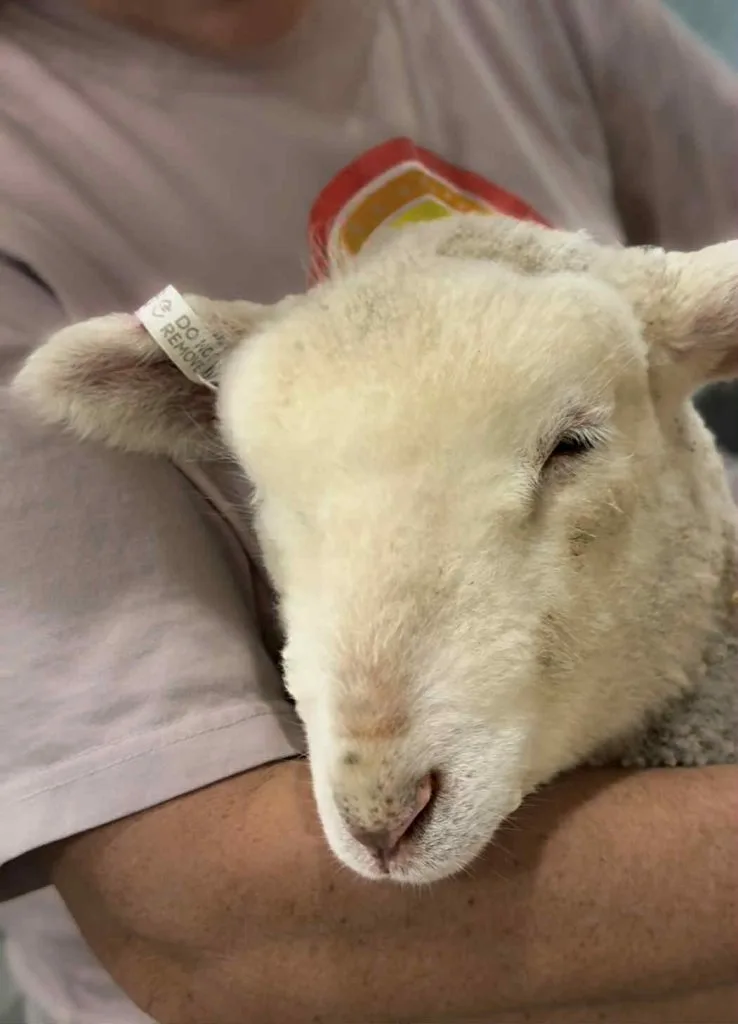
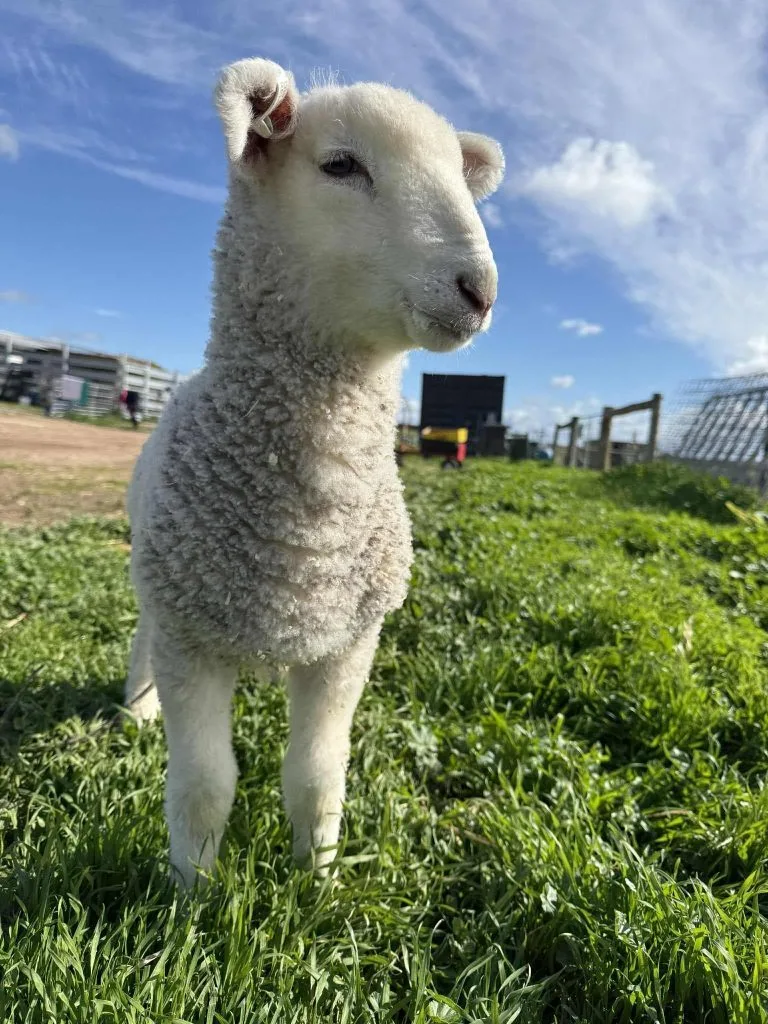
Diana’s story is unique and individual, like all the souls who come to Freedom Hill Sanctuary. But she is not alone in experiencing the trauma of marking day and the injuries that follow. Diana’s story is different because she found her way to us — where her life is valued and she will receive the medical care and therapeutic rehabilitation that she needs to live a happy life, free from pain and suffering.
While Diana experienced unimaginable pain and cruelty, she is one of the lucky ones because she made it to sanctuary. But there are many lambs like Diana who suffer a very different fate. They may die from infection, be left in paddocks unable to walk or help themselves. They may perish from fever, the cold or starvation, often while their mothers hover nearby unable to save their babies.
Diana did not deserve to be treated this way and neither do the countless other lambs who experience this fate, year on year.
If you feel moved by Diana’s story and want a different future for lambs, you can take action. That could mean:
#1 Speaking up: Share this blog. Help others understand the reality of practices that they never asked for.
#2 Support cruelty-free alternatives: Choose plant-based options. Compassionate choices make a difference.
#3 Sponsor a survivor: Help us continue to care for those who’ve escaped the system.
We have so many survivors available to sponsor and support, and Diana is just one of them. You can learn more about the stories of our residents and how you can make a difference on our Sponsorship page, including how you can choose a lamb to sponsor.
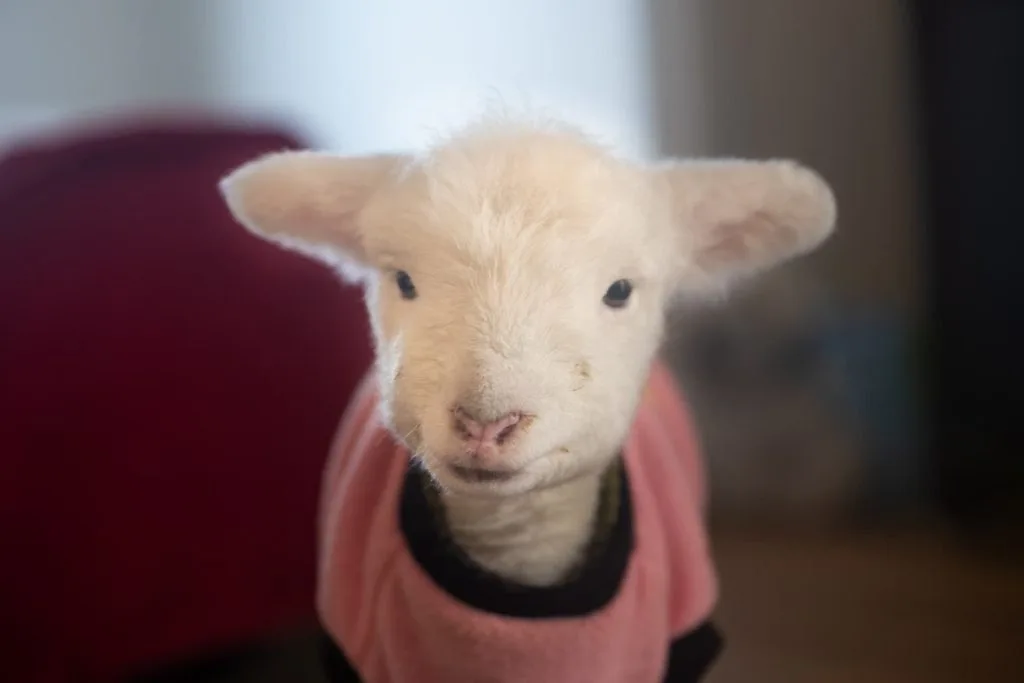
Marking day may be standard in farming, but it doesn’t have to be accepted. Education is the first step toward change. Thank you for standing with us — and with them.
Because no baby should suffer for someone else’s profit.